HOW FINANCING BURIES NEGATIVE EQUITY
Underwater trades, rolled-in balances, and 84-month terms are quietly rebuilding the monthly payment. A look at where the affordability risk actually sits, and what it means for the book.

At a typical new-car desk today, the trade-in appraisal is where the math gets quietly rewritten. A customer walks in to lower a payment and leaves having financed part of the last car on top of the next one. The amount being carried over is not small, and it has been growing for most of a decade.
We took this apart live on August 12, 2026 with an expert panel from retail, lending, and product strategy.
That carried balance is the thread running through every number below. Follow it from the used lot, into the new contract, and out across the life of the loan, and a clear picture of affordability risk comes into view.
1. The trend on the trade-in counter
Edmunds tracks the average negative equity on trades that arrive owing more than they are worth, and the line bends one way. In early 2019 the figure sat near $5,050. By the first quarter of 2026 it reached $7,183, a climb of 42 percent. The 2021 dip, when used values spiked and briefly pushed owners above water, now reads as the exception rather than the rule.
2. How the payment gets rebuilt
What happens to that balance next is the part most payment quotes never show. Roll $10,000 of negative equity into a larger purchase, add the sales tax that many states apply to the financed amount, and the monthly figure moves well beyond the difference in sticker price. In one realistic example, a $680 payment on a $40,000 vehicle becomes a $1,032 payment once a bigger car, the rolled-in balance, and the added tax are stacked together. That is 52 percent more per month, built almost entirely from items a buyer never sees on the window label.
3. Why the term keeps stretching
To keep that number from scaring anyone off, the term stretches. Seventy-two and 84-month loans absorb the higher principal by spreading it thinner, which lowers the payment and lengthens the window in which the borrower owes more than the car is worth. A 60-month loan with 20 percent down stays above water for its full life. An 84-month loan with nothing down and $7,000 rolled in sits underwater for years, and the gap between balance and value is widest at exactly the moment an owner is most likely to trade again, which is how the cycle repeats.
What it means for the book
None of these mechanics are hidden by accident, and none of them are improper. They are the predictable result of affordability pressure meeting a financing structure that rewards a lower payment over shorter exposure. For lenders, captives, and dealer groups, the practical question is how much of this risk already sits in the current portfolio, and how it behaves if used values soften again.
3 ways to go deeper on this topic
- Webinar recap01
Underwater: Negative Equity Is Not Just a Consumer Problem
Watch the recording - White paper02
Underwater: Negative Equity Is Not Just a Consumer Problem
Download the PDF - Blog03
North American trade rules and the next round of negative equity
Read the trade-policy angle
Want to talk about how negative equity is affecting your portfolio?
More from the AMA team.
 Newsletter
Drivers pick the station by what is next door
Paren studied 4,105 DC fast charging stations at 100 kW or above and found the median site running 9 sessions a day, grocery-adjacent sites running 42, and sites with nothing within walking distance running 3. A 100 kW session takes 25 to 40 minutes, which is what a grocery run takes, so the low numbers at most sites measure whether people will wait in a parking lot for half an hour and tell you very little about EV demand in that trade area.
George Ayres · Sep 10, 2026 Newsletter
How Rolled-In Negative Equity Turns a $680 Payment Into $1,032
Underwater trades, rolled-in balances, and 84-month terms are quietly rebuilding the monthly payment, and the affordability risk now reaches lenders, captives, and dealer groups.
George Ayres · Jul 8, 2026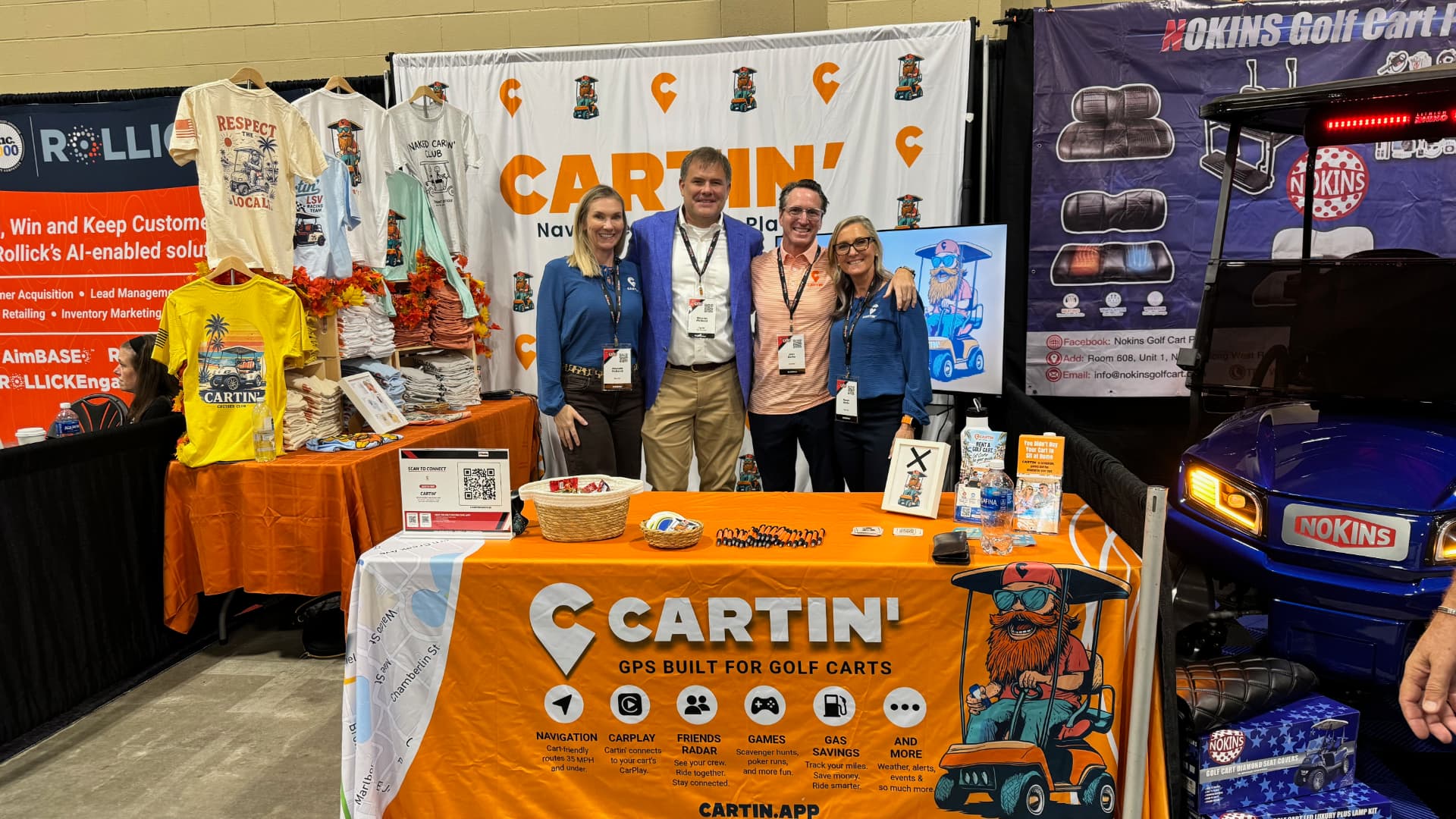 BLOG
BLOGCartin' gives golf cart dealers a way to stay with the owner after the sale
At the GolfCarting Expo in Charleston, Cartin' showed how navigation, social features, games, and dealer-run events can keep golf cart owners connected long after delivery.
Mariestella Colón Astacio · Oct 3, 2026
Talk to us about what you want to accomplish
Schedule 20-minutes with AMA. We will use the time to understand what you are trying to accomplish and how AMA can help.