Trends in Visual Inspection Technology for Automotive Retailers
Innovations transforming dealership operations and customer experience. AI was everywhere at NADA in Las Vegas, but one area has immediate, direct application to automotive retail: visual inspection.
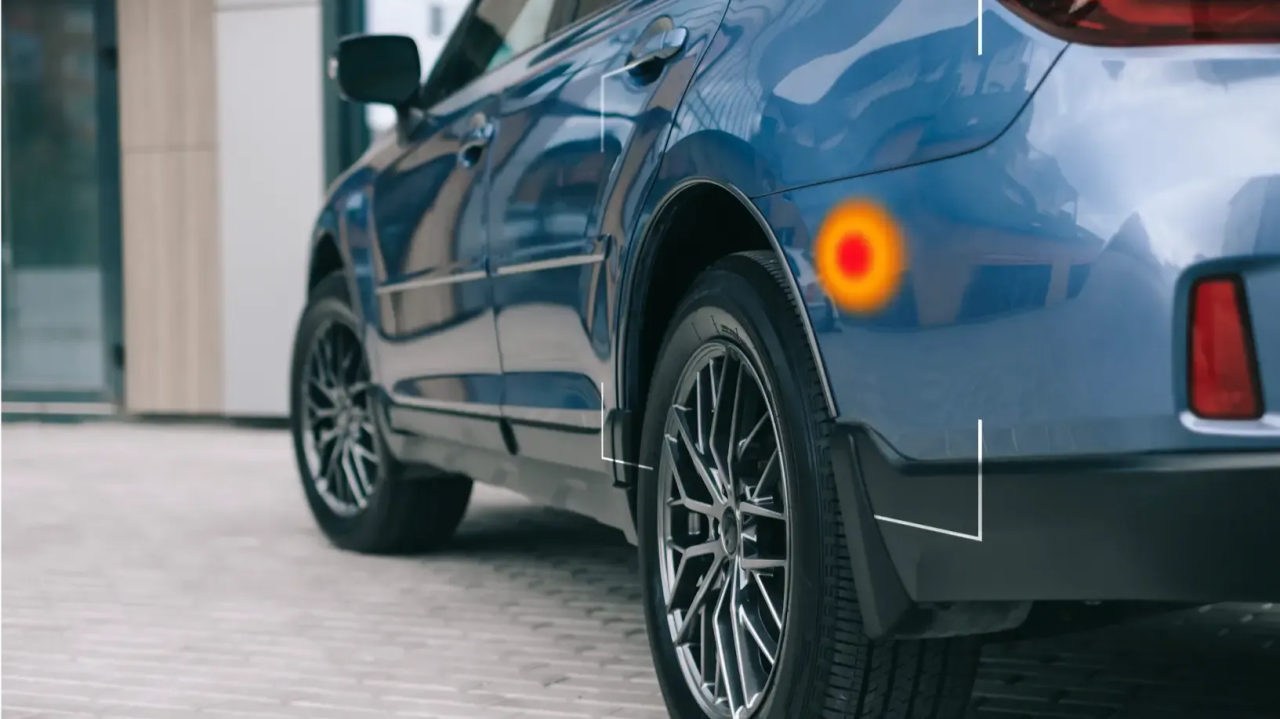
At the NADA show in Las Vegas last week, the AutoMobility Advisors team saw many new technologies that are now available to automotive retailers, and that can help drive higher customer engagement and customer satisfaction. While AI was clearly everywhere at the show, one area of AI has an immediate and direct application to the automotive retail experience — visual inspection.
Visual inspection technology is now reshaping automotive retail, moving beyond factories and into dealerships and service centers. These systems are improving operational efficiency, boosting quality assurance, and enhancing transparency between retailers and buyers. By leveraging AI, high-resolution imaging, and cloud-based tools, dealerships can deliver more accurate vehicle assessments, elevating both the sales and service experience.
AI-powered vehicle condition assessment
AI-driven platforms analyze images and videos to automatically detect scratches, dents, paint defects, and more, often catching subtleties unseen by the human eye. With training from vast image databases, these systems are quick and consistent, reducing subjectivity during trade-ins, lease returns, and pre-delivery checks. Standardized reports generated by these platforms streamline communication and help maintain high showroom standards.
Mobile and cloud-based inspection solutions
Mobile applications allow staff to conduct thorough vehicle inspections anywhere — on the lot, in the service bay, or even roadside — with high-resolution cameras on smartphones and tablets. These tools sync with cloud platforms, enabling secure storage, instant sharing, and remote expert consultation. Comprehensive records for each vehicle support transparency and simplify processes like warranty validation or dispute resolution, while also driving operational efficiency.
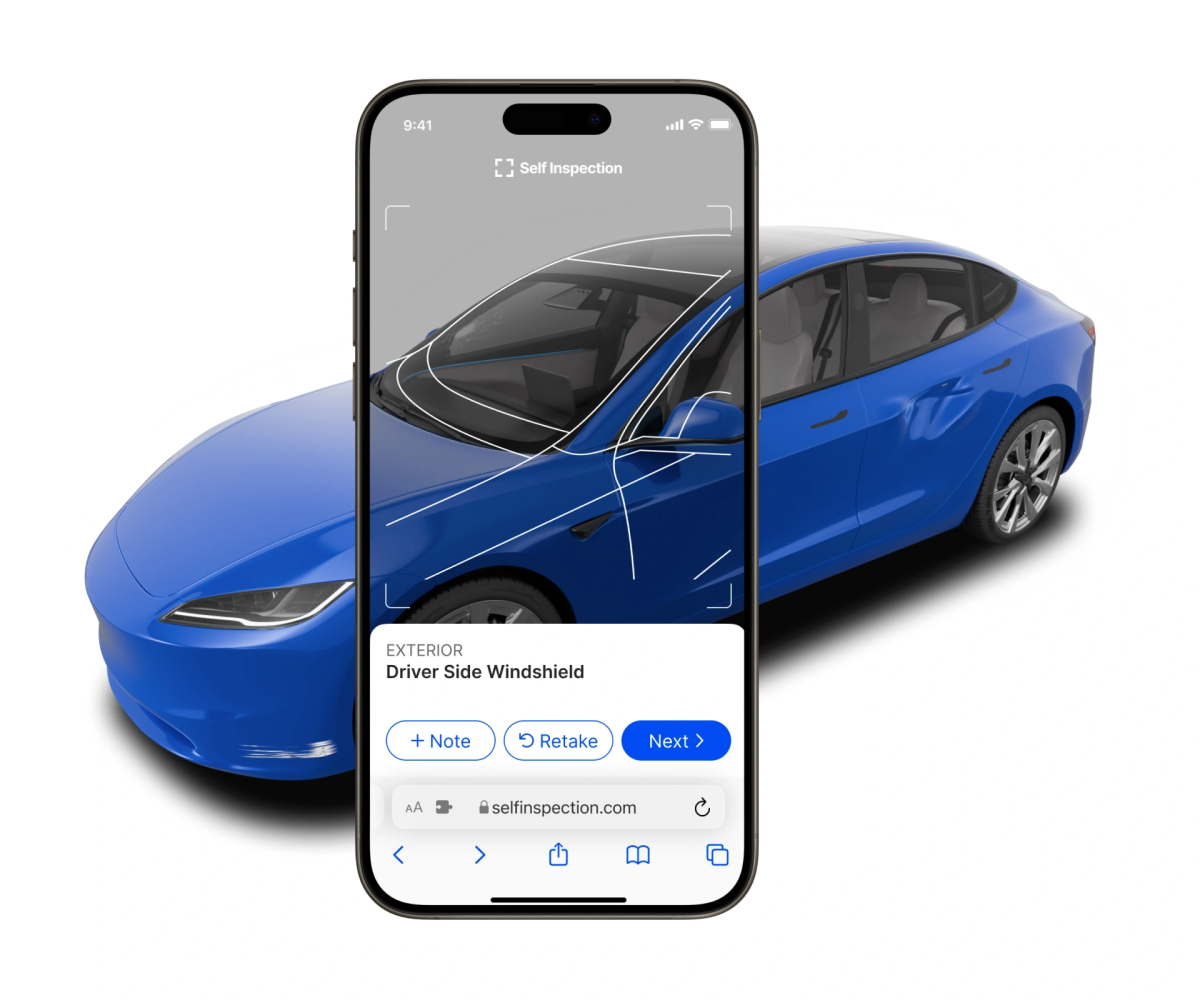
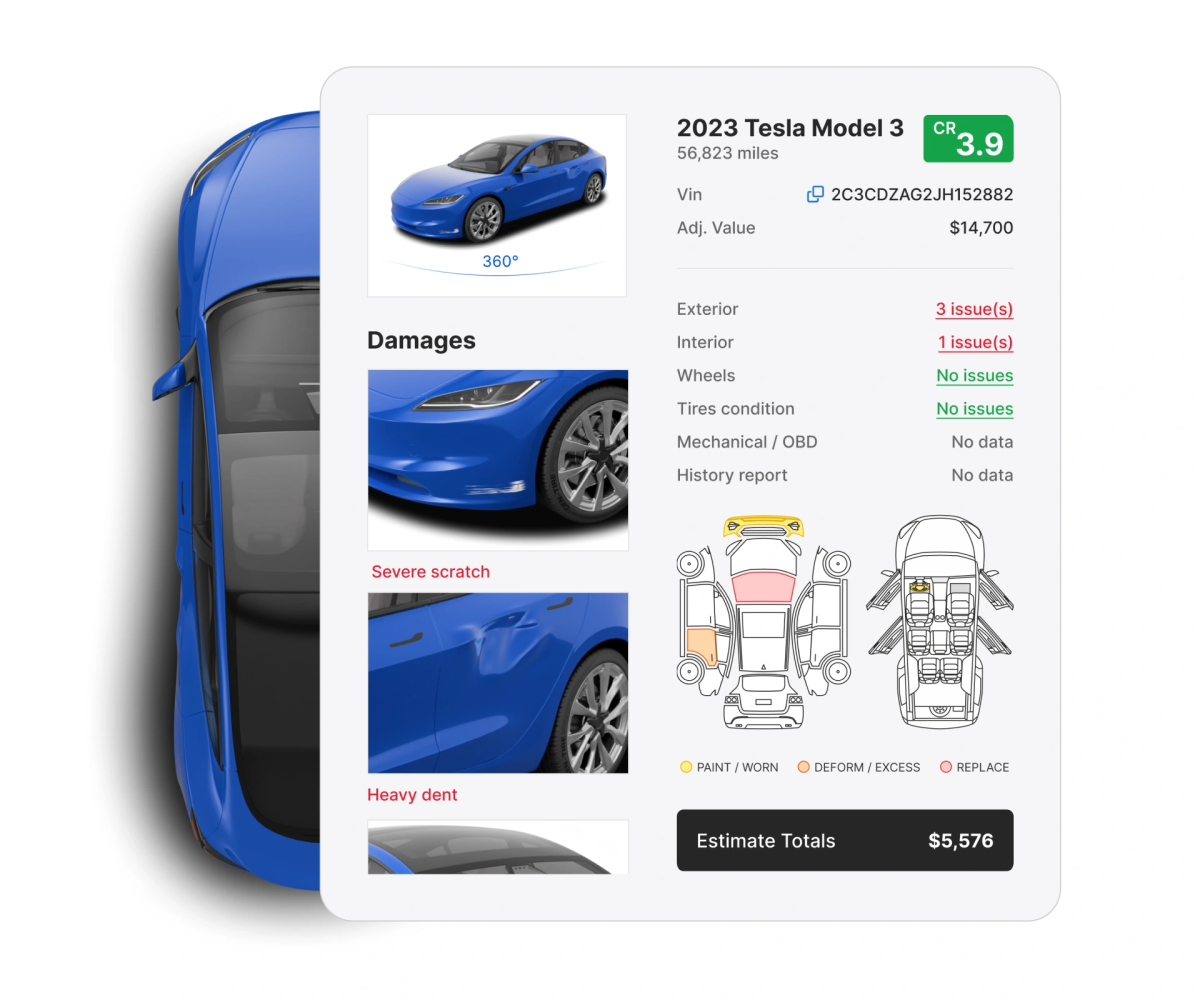
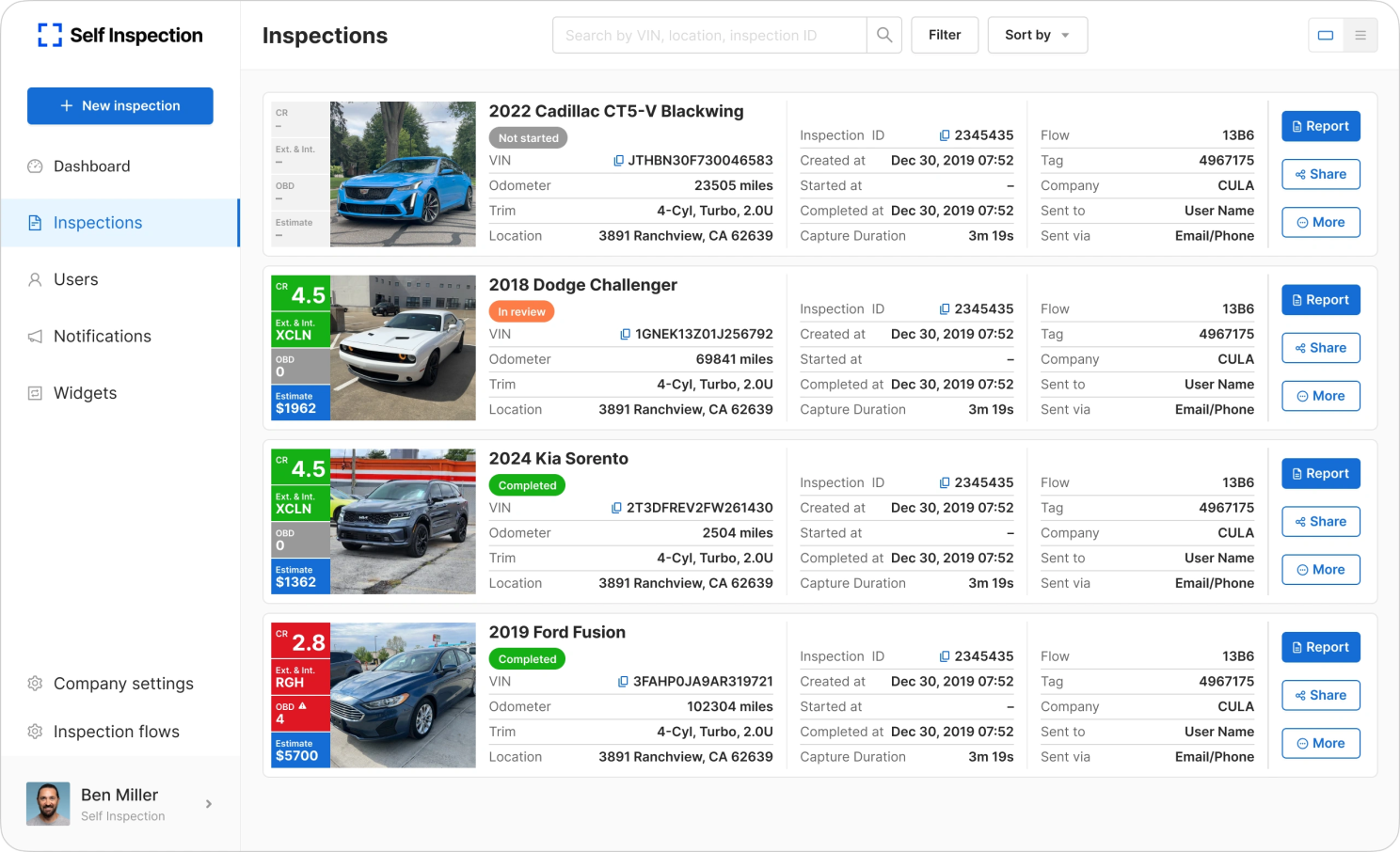
One company innovating in this space is Self Inspection. They’ve created a comprehensive mobile application that dealer employees, bank or finance company personnel, and even customers can easily use to create a highly detailed digital vehicle condition report. With robust algorithms and wide data access, Self Inspection’s mobile application can more accurately estimate a vehicle’s value, and even determine current repair costs, all within seconds.
Companies like Westlake Financial are already integrating Self Inspection across their business units, and have seen significant value to detect and assess issues, as well as significant savings that they can pass to their consumers. Ian Anderson, President of Westlake Financial said, “We need to maintain accurate records of a vehicle’s condition to ensure correct valuations, manage risk effectively, prevent fraud and determine fair prices for our customers. Self Inspection allows us to streamline and standardize our processes, ensuring accurate vehicle assessments with precise, data-backed reports at scale.” Learn more at selfinspection.com.
3D imaging and damage detection
Three-dimensional imaging, using structured light or laser sensors, brings new accuracy to retail vehicle inspections. Full-body scans reveal even minor surface flaws, panel misalignments, or wheel issues that traditional methods might miss. This objective, quantifiable data is especially useful for trade-ins and insurance claims, supporting lifecycle management and building customer confidence.
Real-time reporting and customer transparency
Visual inspection systems now deliver immediate, detailed reports featuring annotated images and videos. These can be shared digitally, providing customers with clear visual highlights of detected issues and recommendations. Such transparency expedites transactions and empowers buyers to make informed decisions, fostering trust and minimizing disputes.
Automated check-in and check-out for service departments
Automated camera portals at service department entrances and exits capture high-definition images of vehicles, creating visual records before and after servicing. Comparing these records helps identify new damage and verify repairs, efficiently resolving complaints or insurance claims. This automation speeds up intake and delivery, freeing up staff, and provides valuable data for ongoing quality improvement.
Integration with digital retail and online marketplaces
Digital retailing relies on detailed visual inspection data: high-resolution images, 360-degree views, and thorough condition reports embedded in online listings. These tools give remote buyers confidence, reduce post-sale complaints, and streamline trade-in appraisals. For dealerships, integrating inspection data with online platforms means broader reach, smoother transactions, and higher customer satisfaction.
Conclusion
The automotive retail sector is rapidly adopting advanced visual inspection technologies, from AI-powered assessments and 3D imaging to real-time reporting and digital retail integration. These innovations are raising quality standards, improving efficiency, and strengthening customer trust. Dealerships that embrace these tools are better positioned to meet modern consumer expectations and deliver exceptional value throughout the car buying and ownership journey.
3 ways to go deeper on this topic
- Roadmap Newsletter01
AI: A New Tool for the Automotive Innovator
Read the newsletter - White paper02
Building Towards the AI-Defined Vehicle, the full AMA and Devox Software framework
Download the PDF - Webinar recap03
Moving Toward the AI-Defined Vehicle
Watch the recording
Want help evaluating inspection and AI tools for your retail or fleet operation? The AutoMobility Advisors team can help.
More from the AMA team.
 Newsletter
Who gets paid when the car fixes itself?
Thirty-five of the 997 safety recalls filed in 2025 were remedied over the air, reaching 3.7 million vehicles. When a vehicle repairs itself overnight, the dealership never opens a repair order, and the contracts that decide who gets paid were written for a technician standing in a bay.
George Ayres · Aug 19, 2026 Newsletter
The ITS World Congress 2025: Where AI Meets Trust on the Road to Autonomous Mobility
The ITS World Congress 2025 in Atlanta proved once again why it remains the premier stage for charting the future of mobility. Thousands of industry leaders gathered across five days, revealing a profound shift: AI has become the operating foundation of modern transportation…
AutoMobility Advisors · Sep 3, 2025 Newsletter
Drivers pick the station by what is next door
Paren studied 4,105 DC fast charging stations at 100 kW or above and found the median site running 9 sessions a day, grocery-adjacent sites running 42, and sites with nothing within walking distance running 3. A 100 kW session takes 25 to 40 minutes, which is what a grocery run takes, so the low numbers at most sites measure whether people will wait in a parking lot for half an hour and tell you very little about EV demand in that trade area.
George Ayres · Sep 10, 2026
Talk to us about what you want to accomplish
Schedule 20-minutes with AMA. We will use the time to understand what you are trying to accomplish and how AMA can help.