Building Towards the AI-Defined Vehicle
A framework for choosing and scaling an agentic AI use case in automotive: production traction, operating limits, and a roadmap to a first governed pilot.
The automotive industry is pivoting toward the AI-defined vehicle (AIDV) while most OEMs are still building the software-defined vehicle (SDV) foundation underneath it. The gap between those two states explains most of what is going right and wrong with agentic AI in this industry. Agentic systems deliver value when the data is reliable and the controls around it are stable; autonomy granted before that point mostly adds risk. This white paper, produced by AutoMobility Advisors with our engineering partner Devox Software, is a framework for choosing one agentic use case, sizing the autonomy it can safely carry, and scaling it against demonstrated results.
Start with the uncomfortable numbers. Gartner expects more than 40% of agentic AI initiatives to be canceled by 2027, and of the thousands of vendors claiming agentic capability, only around 130 offer genuinely autonomous systems. More than 95% of automakers are investing heavily in AI while organizational maturity improves far more slowly — a gap Gartner expects to force a shakeout, with only 5% of automakers sustaining today's investment pace by 2029. The failures rhyme: agentic AI works in bounded processes, scaling exposes the weakest layer of the stack, and the return on any agent is capped by the maturity of the data architecture beneath it.
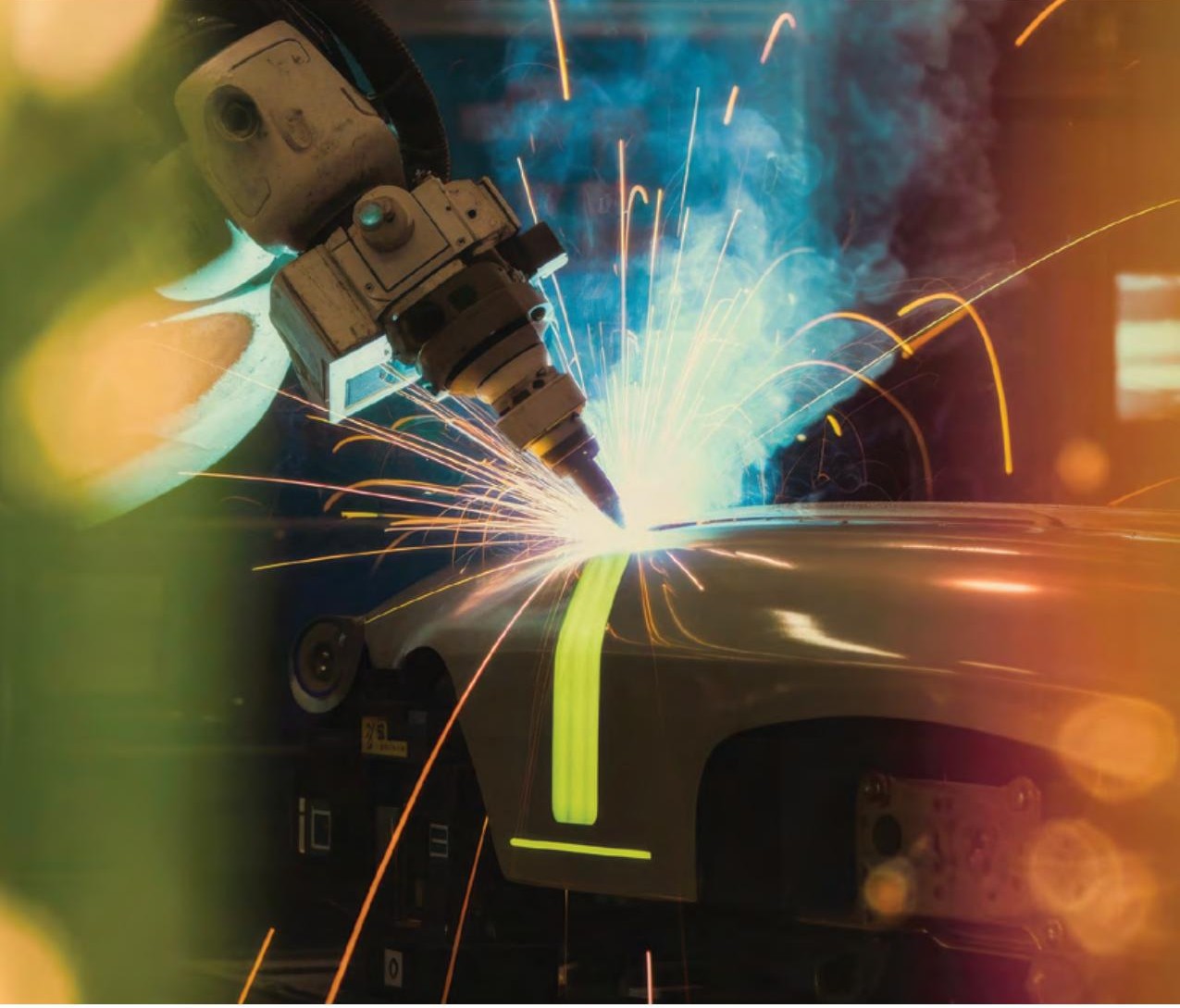
So where is it actually working? Not, for the most part, inside the vehicle. The wins are in the value chain that designs, builds, supplies, and services it. Engineering teams are cutting test-case preparation time by roughly half with agentic workflows connected to historical requirements databases. GM now inspects every weld on every body in real time at Factory ZERO instead of sampling four parts per shift. Supply chain deployments are turning faster decisions into measurable savings, and after-sales programs are moving from fault signal to scheduled repair. Every one of them shares the same shape: a known signal, a defined response, and a delay that already costs the business something countable.
Vehicle-level AI is real but unproven at production scale, and the paper is specific about what today's programs at Tesla, VinFast, and NVIDIA do and do not demonstrate — including what breaks when the agentic layer outruns the SDV foundation. It also makes the case for predictive maintenance as a strong first candidate when telemetry is dependable, and shows exactly how a vehicle-health agent working from untrusted data confuses a failing part with a bad sensor reading and dispatches the wrong service action.
The core of the paper is the part you can act on Monday: a five-step path to a first production pilot — assess readiness, select one bounded high-value workflow, document autonomy level and authority boundaries with tested approval, escalation, and rollback paths, pilot at the lowest responsible autonomy level, and expand only against demonstrated results. It is anchored by a three-tier autonomy ladder — monitor and alert, analyze and recommend, schedule and act — where fragmented telemetry holds a use case at Tier 1, clean versioned data is the price of admission to Tier 2, and Tier 3 becomes defensible only when every action can be explained and safely reversed. Market signals, common failure patterns, how selected OEMs are moving from SDV to agentic systems, a glossary, and full sources round it out.
If you lead product, engineering, manufacturing, supply chain, or aftersales strategy, download the paper for a defensible way to pick your first agentic use case — and a governance model that keeps it in production instead of on a slide.
2 ways to go deeper on this topic
- Webinar recap01
Moving Toward the AI-Defined Vehicle
Watch the recording - Interactive field guide02
From SDV to AIDV: Where Agentic AI Works in Automotive Today
Read the field guide
Want to talk about what this means for your team?
Download the White Paper
Enter your work email and the PDF opens right away. We email a copy too, so you can read it on any device.
Moving Toward the AI-Defined Vehicle
September 2, 2026 · Online webinarMore from the AMA team.
 Newsletter
Towards the AI-Defined Vehicle: A Framework for Choosing and Scaling an Agentic Use Case
The industry is pivoting toward AI-defined vehicles, but most OEMs must first secure a stable software-defined vehicle foundation. Five reality checks, four production use cases, and a five-step roadmap to a first governed agentic pilot.
George Ayres · Jul 29, 2026 THOUGHT LEADERSHIP
AI Won't Fix a Broken Foundation
Moving Toward the AI-Defined Vehicle — AMA x Devox Software webinar Chip Goetzinger
- Devox Software
Sep 2026Watch talk THOUGHT LEADERSHIP
VERO: A Framework to Evaluate Any AI Project
Moving Toward the AI-Defined Vehicle — AMA x Devox Software webinar Anoop Tiwari
- Devox Software
Sep 2026Watch talk
Talk to us about what you want to accomplish
Schedule 20-minutes with AMA. We will use the time to understand what you are trying to accomplish and how AMA can help.