China's carmaker shakeout will be decided in export markets
Chery's international president says around 90% of China's carmakers are losing money. Chery now earns about 70% of its revenue abroad at better margins, and that pattern points to where the shakeout will be decided.
Zhang Guibing, president of Chery International and an executive vice president of Chery Automobile, told Australian journalists at the company's headquarters in Wuhu that most of China's carmakers are losing money. Working from the financial reports that listed Chinese manufacturers publish, he put the share at “maybe around 90 per cent,” and he expects many of those companies to fail.
He was asked how many manufacturers would survive the competition and whether Australian buyers could trust newer Chinese brands to still be around in 5 to 10 years. His answer was “Too many companies, surely later will die, will disappear,” and he tied the losses to development costs, since a new car now needs investment across a much wider range of technology, where development used to center on mechanical engineering.
Chery is one of the profitable exceptions, and its half-year accounts show overseas customers now supplying about 70% of its revenue at better margins than it earns in China. I think that pattern decides the shakeout, because the Chinese automakers that survive will be the ones that earn abroad what they can't earn at home, and the markets taking that volume are the same ones where American and European automakers and suppliers compete for their own margins.
35 million vehicles from 55 million of capacity
China built about 35 million new vehicles in 2025 against estimated annual capacity of around 55 million, a gap of roughly 20 million vehicles a year that still carries the cost of plants, payroll and development programs. AlixPartners expects the domestic market to shrink 10% this year to 24.6 million light vehicles after sales fell 18% in the first five months, and a Sohu report cited by CarExpert put the industry's profit margin at 3.2% in the first quarter of 2026.
According to the June 2026 Global Automotive Outlook, only 3 of the 30 Chinese automakers focused on new energy vehicles turned a full-year profit in 2025. AlixPartners expects 7 of those 30 to break even by 2030, with the rest exiting the market or becoming acquisition targets, including for foreign investors.
Zhang's 90% is a rough estimate drawn from the reports listed companies publish, and the AlixPartners study covers only manufacturers built around battery electric, extended range and plug-in hybrid vehicles, a narrower group than the whole industry. I can't tell you how many Chinese automakers will still be operating in 2030, and when he was asked directly, Zhang didn't put a number on it either.
Chery's first half of 2026
Hong Kong-listed Chery Automobile reported net profit of 9.02 billion yuan for the first six months of 2026, down 9% from a year earlier, as foreign exchange losses weighed on a result in which gross profit still rose. Research and development spending climbed 28.3% to 6.67 billion yuan over the same period, which the company attributed to more development activity and higher personnel costs.
Overseas customers supplied 69.1% of Chery Automobile's revenue in the half, up from 46.3% a year earlier. The company says those overseas sales carry higher gross margins than its domestic business, and the shift lifted its overall gross margin.
When asked whether development costs might settle once vehicle technology matures, the way they did for mobile phones, Zhang said he couldn't tell what tomorrow's car would be, or the car after that. Coming from the head of international business at one of China's few profitable carmakers, that answer tells me Chery plans to keep spending at this pace, and rivals already reporting losses will struggle to match it.
Nearly 10 million vehicles for export
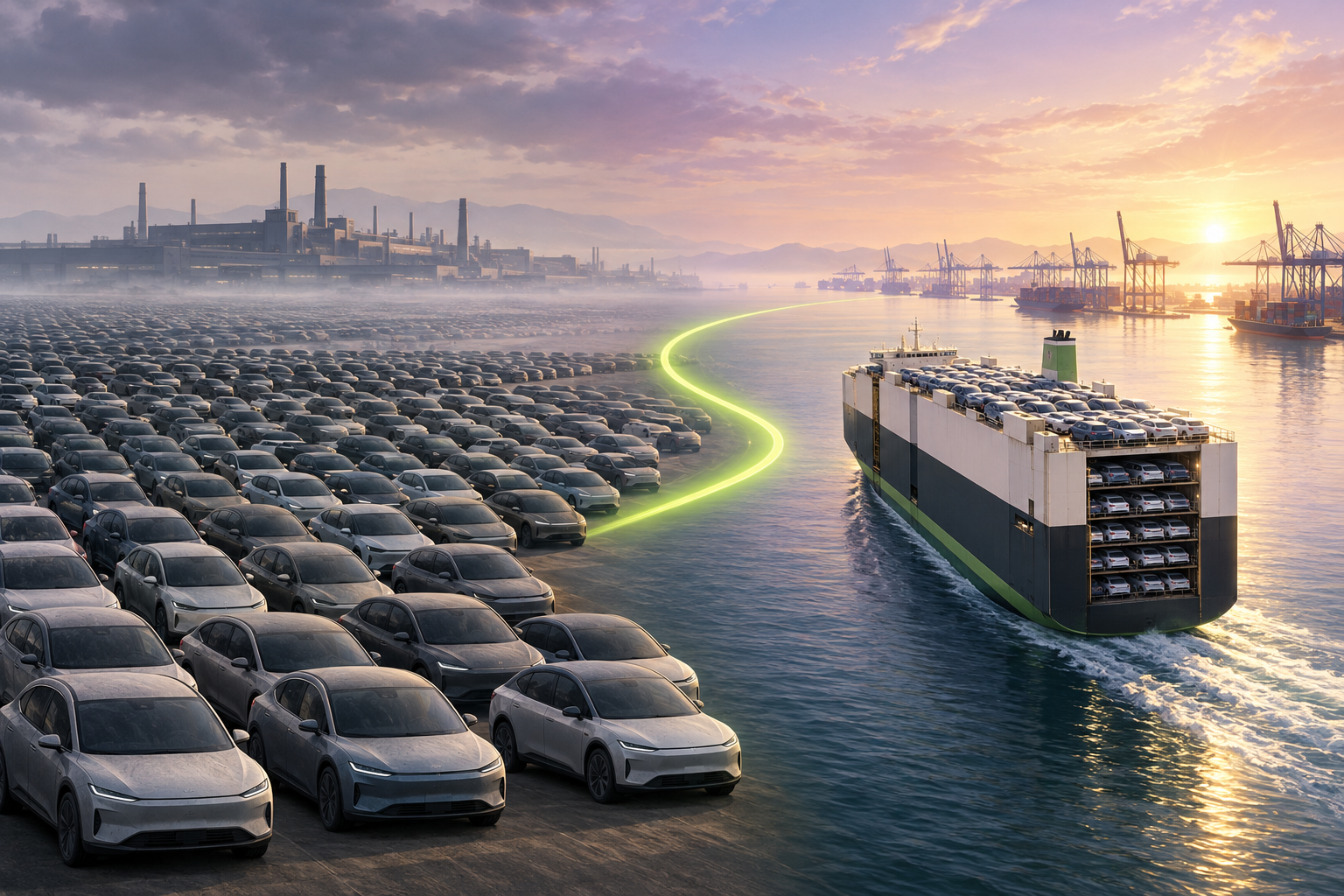
AlixPartners projects Chinese automakers will export nearly 10 million vehicles in 2026, up from 7.1 million in 2025, in the same year it expects domestic sales to fall 10%. Chery's revenue shift is that pattern inside a single company, and the company has said plainly that the overseas business pays better.
In Europe, AlixPartners expects Chinese-brand sales to rise 25% this year to 2.3 million units and reach 16% of the market by 2030, a figure that includes Russia. Vehicles built in China, including those sold under non-Chinese badges, made up 38.9% of Australia's new vehicle deliveries in September 2026, and Chery delivered 4,205 vehicles there that month, up 21.8% on September 2025.
Zhang told the Australian journalists that China has too many car companies. Chery plans to launch Lepas in Australia before the end of 2026, followed by Freelander, iCaur, Jetour, Exlantix and Luxeed in 2027.
I expect the companies that fail to be mostly weaker domestic players, while survivors such as Chery fill the space with more brands in the export markets where margins are better. AlixPartners describes exports as the first stage, with technology licensing, contract manufacturing and joint ventures to follow in more protected markets and local production as the longer-term goal.
Brand survival is a question for dealers, fleets and suppliers
The Australian journalists asked whether buyers can count on today's new Chinese brands still existing in 5 to 10 years, and Zhang's answer was that many companies will disappear. Every dealer group signing a franchise agreement with a Chinese brand should be asking the same thing, because the parent company's health decides who honors the warranty, who stocks parts and who keeps the software updated over the life of the vehicle.
Fleet managers carry the same exposure through residual values, since a brand that exits a market takes its resale demand with it. Suppliers outside China carry it through receivables and tooling commitments, particularly with the smaller manufacturers AlixPartners expects to exit or be acquired.
Before signing with a Chinese brand partner, I'd ask for audited parent company financials and a written answer on who carries the warranty and parts obligations if the brand is withdrawn from the market or sold. I'd expect some distributor agreements signed this year to outlast the companies on the other side of them.
The US stays closed to Chery for now
Chinese-built electric vehicles carry a 100% Section 301 tariff in the US, and the Commerce Department's Connected Vehicle Rule restricts Chinese software, along with sales by manufacturers with sufficient ties to China, from the 2027 model year, including vehicles built in the US. Polestar was denied authorization to sell 2027 model year vehicles in June 2026, even though it builds the Polestar 3 in South Carolina.
Zhang acknowledged that the regulations make entry difficult and said Chery is still “very interested to come inside.” He also argued that a lack of competition is why American buyers pay so much, and Kelley Blue Book put the average US new vehicle transaction price at $50,562 in September 2026.
US automakers and suppliers sell into Europe, Mexico, South America and Australia, where Chinese brands are already gaining share, so the shakeout in China reaches them well before any Chinese brand reaches an American showroom. The consolidation Zhang predicts will leave them facing fewer Chinese rivals in those markets, each with more scale, a larger development budget and an export business that already earns its best margins. Ford CEO Jim Farley reportedly told employees earlier this year that he expects Chinese automakers to enter the US within 5 to 10 years, and if he's right, the companies that arrive will be the ones that came through this period.
Sources
Roy Mulenga, “Chery President Warns 90% of Chinese Carmakers Are Losing Money: Will Chinese Cars Hold the Line?”, Business Tech Africa, October 28, 2026.
Alborz Fallah, “Chery boss says around 90 per cent of Chinese automakers lose money,” CarExpert, October 2026.
Alborz Fallah, “Chery boss wants to enter the US market, warns America risks falling behind,” CarExpert, October 2026.
AlixPartners, “AlixPartners forecasts China auto sales to drop 10% in 2026 as global market contracts 4%,” June 30, 2026.
Weighing a partnership with a Chinese brand?
More from the AMA team.
 BLOG
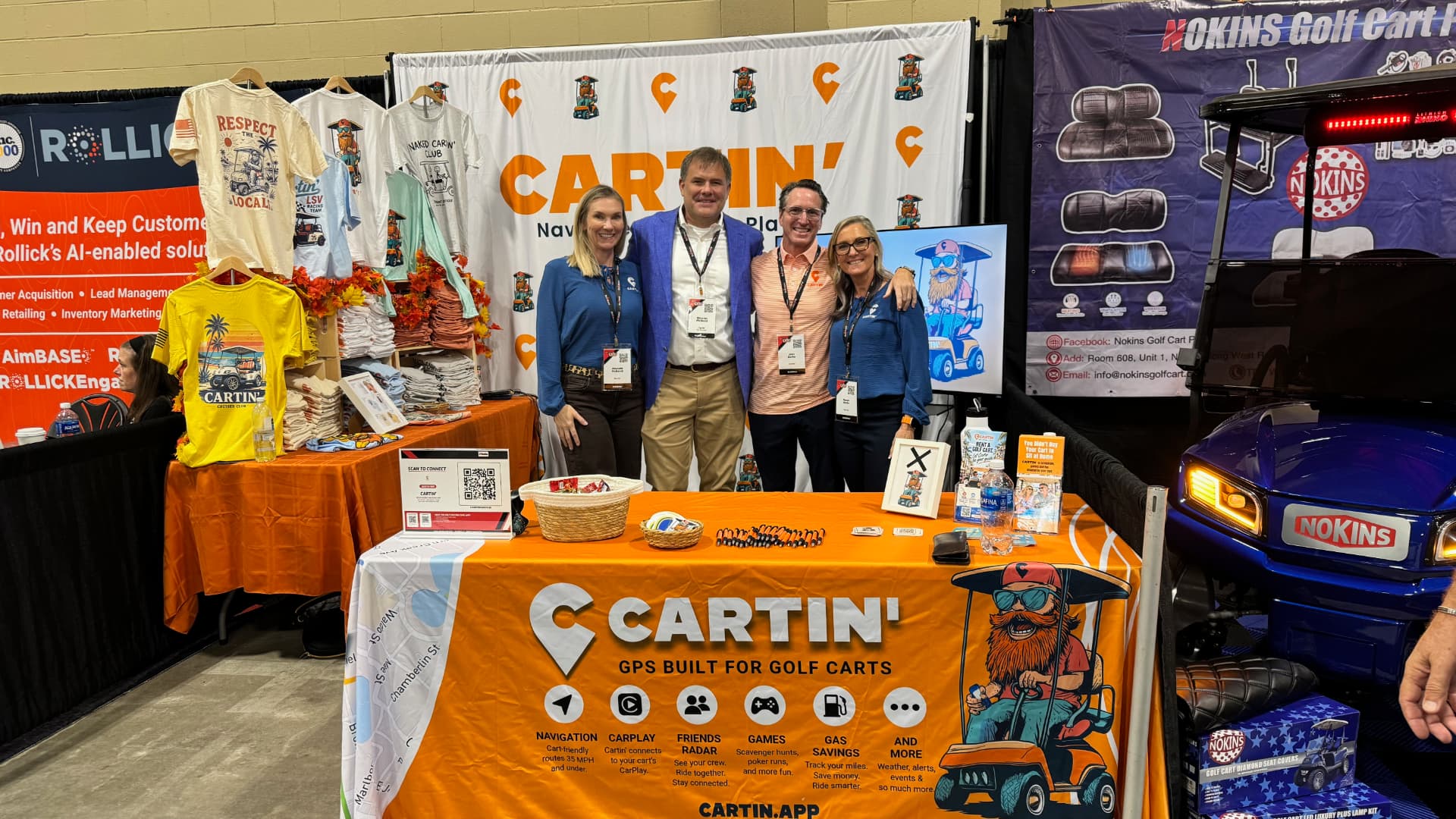
Cartin' gives golf cart dealers a way to stay with the owner after the sale
At the GolfCarting Expo in Charleston, Cartin' showed how navigation, social features, games, and dealer-run events can keep golf cart owners connected long after delivery.
Mariestella Colón Astacio · Oct 3, 2026 Newsletter
Drivers pick the station by what is next door
Paren studied 4,105 DC fast charging stations at 100 kW or above and found the median site running 9 sessions a day, grocery-adjacent sites running 42, and sites with nothing within walking distance running 3. A 100 kW session takes 25 to 40 minutes, which is what a grocery run takes, so the low numbers at most sites measure whether people will wait in a parking lot for half an hour and tell you very little about EV demand in that trade area.
George Ayres · Sep 10, 2026 Webinar recap
Moving Toward the AI-Defined Vehicle: Webinar Recap
What it takes to deploy AI responsibly across automotive engineering, manufacturing, supply chain, and vehicle programs — from validating vendor claims to building the data, governance, and human oversight that make results measurable.
George Ayres · Sep 2, 2026
Talk to us about what you want to accomplish
Schedule 20-minutes with AMA. We will use the time to understand what you are trying to accomplish and how AMA can help.