Waiting for to Go!
Part three of a three part series on the development of EVs and their supporting infrastructure in the United States: how the industry can fill the idle time created by extended EV charging sessions.
This is part three of a three part series on the development of EVs and their supporting infrastructure in the United States.
Aside from the technical differences between EV and gas cars, perhaps one of the largest divergences between the ICE and EV automobile experiences is the refueling experience. For nearly the last century, the method in which cars and trucks have been refueled has seldom changed. The driver pulls up to a gas pump, selects the fuel grade, and then spends about five minutes waiting for their tank to fill up. Then, when they have finished, they can simply drive off, having only budgeted (at most) 10 minutes for their stop. Now, with the mass introduction of EVs, this procedure, thus far so intrinsic to car culture, is in the process of completely changing. A new challenge has arisen for EV owners; the time it takes to charge a light electric vehicle from an empty battery can take up to 40 minutes within even the fastest, most advanced charging technology. This presents a quandary for the mass implementation of EVs and EV charging in which large chunks of idle time that did not exist for ICE cars are suddenly a fact of life for EV owners. How does the EV business sector best adapt to this reality in order to improve the quality of life for EV owners and operators?
Many different solutions have been pitched to bridge the half-hour to hour long gaps in time that are (for now) a fact of life with EV ownership. The first viable solution is the addition of new forms of in-car entertainment. Tesla has taken the lead on this, providing opportunities for drivers to watch tv, stream movies, and even play video games on the head unit. In areas with adequate internet service, this is an acceptable stopgap measure, as it provides several ways to occupy time without even having to leave the car. Other OEMs and telematics service providers have yet to follow Tesla’s lead, but it is probable that a company like Rivian would integrate their own version of the Tesla arcade into the R1T and R1S. The ability for owners to download content onto their car’s head unit would become an important quality of life feature for OEMs to install.

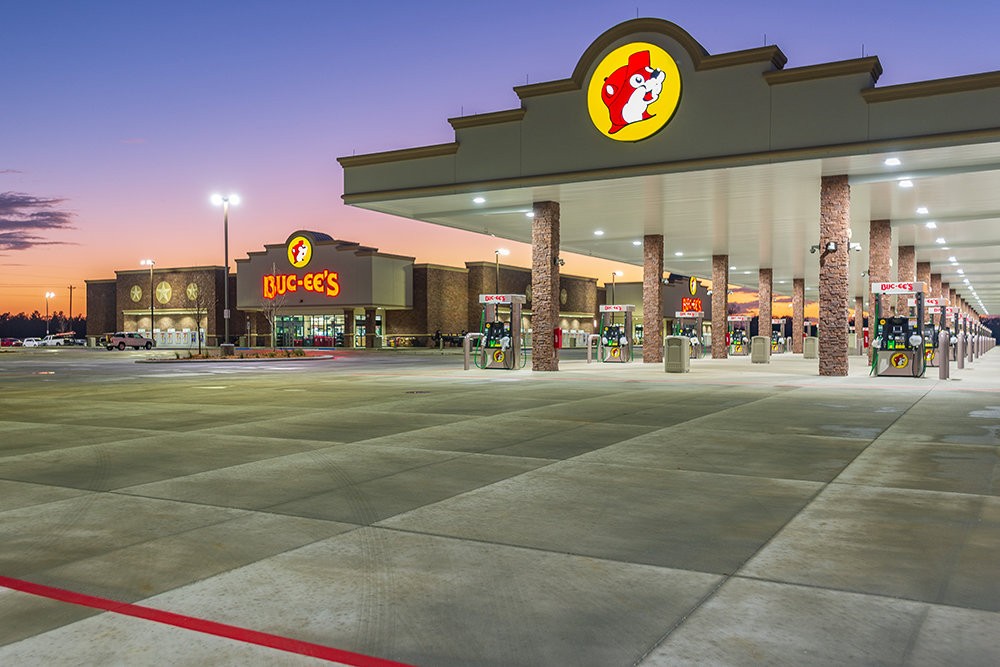
On the other hand, a more infrastructure based approach could be a feasible solution to this problem. Already a real world product offered by a company such as Buc-ees’s, creating a network of upscale facilities dedicated to providing amenities, entertainment, and a space to work is a highly appealing answer to the extended charging time issue. The Buc-ee’s business model is to take a normal gas station experience and turn it into a shopping and dining destination. Likewise, Buc-ee’s aims to provide spotless facilities for use by customers. Taking this business model and applying it in some form to EV charging stations will give consumers an engaging experience for the full period of time while they wait for their vehicle to charge. Other approach vectors include building coffee shops that double as business centers, allowing professionals to take meetings in a clean cafe environment, or additional food and beverage options beyond a single fast-food joint. The expense of widely adopting a plan like this may be a deterrent to its implementation, but future federal funding may include a budget towards its development as a part of building more EV infrastructure.
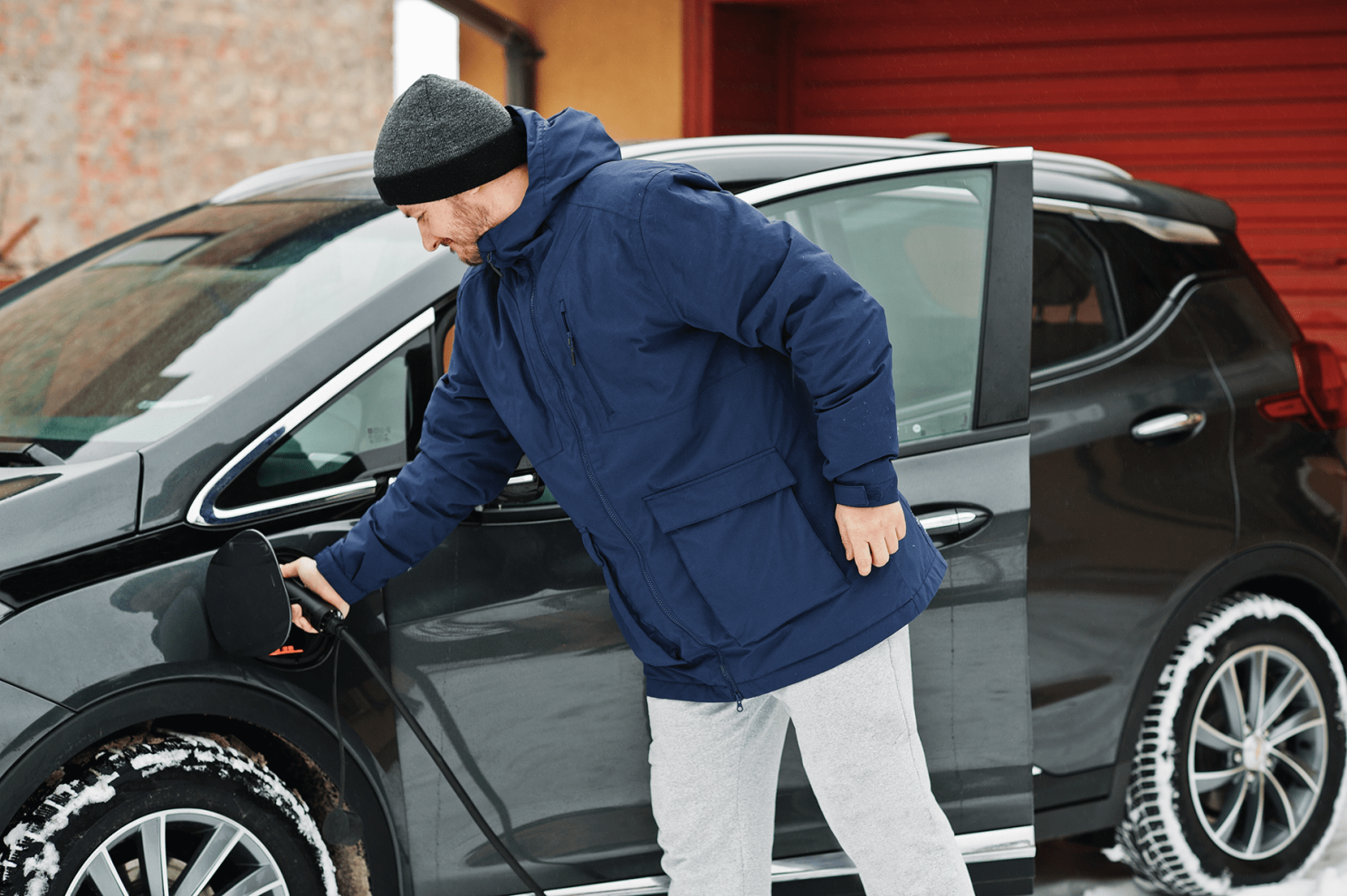
A third solution to this problem is to use smart charger technology to allow drivers to leave their EVs at a charging station and spend time elsewhere. Pioneered by WirelessCar’s Plug & Go technology, the addition of smart charging provides owners with the ability to easily find charging stations and then leave their cars to charge with little hassle thanks to internet connectivity. With many car charging stations still not connected to the internet, there are difficulties in finding places to charge and worries that the charging station will not work effectively (the driver may feel the need to stay with the car). With new smart charging technology, drivers are able to leave their cars for the duration of the charging period and use that down time to get something to eat, shop, etc. This solution is the most practical in urban and well developed areas, but nonetheless will service a large majority of the population.
For now, no perfect solution exists by itself to the dilemma that an extended charging period presents to EV owners. That being said, serious time, money, and effort are being invested into all of the answers presented above, and positive steps have been taken towards perfecting the EV user experience. As the technology surrounding EVs and charging continues to develop, it is possible that the need for lengthy charging periods will cease to exist because of improved batteries and chargers, but for now, the industry must continue to pursue solutions conducive to the continued growth of the EV business. The better the experience and convenience is for EV ownership, the more likely the mass adoption of EVs will continue into the future, resulting in an environmentally friendly and sustainable world of mobility.
More from the AMA team.
 Newsletter
Drivers pick the station by what is next door
Paren studied 4,105 DC fast charging stations at 100 kW or above and found the median site running 9 sessions a day, grocery-adjacent sites running 42, and sites with nothing within walking distance running 3. A 100 kW session takes 25 to 40 minutes, which is what a grocery run takes, so the low numbers at most sites measure whether people will wait in a parking lot for half an hour and tell you very little about EV demand in that trade area.
George Ayres · Sep 10, 2026 Newsletter
Cars and Copper
This is part one of a three part series on the development of EVs and their supporting infrastructure in the United States: can the US power grid keep up with electric vehicle demand?
George Ayres · Mar 8, 2023 Newsletter
Who gets paid when the car fixes itself?
Thirty-five of the 997 safety recalls filed in 2025 were remedied over the air, reaching 3.7 million vehicles. When a vehicle repairs itself overnight, the dealership never opens a repair order, and the contracts that decide who gets paid were written for a technician standing in a bay.
George Ayres · Aug 19, 2026
Talk to us about what you want to accomplish
Schedule 20-minutes with AMA. We will use the time to understand what you are trying to accomplish and how AMA can help.