Hold onto your EV assets!
Many of the electric vehicles coming to market will be owned by fleets, not individuals. How fleet operators will monitor battery health, insure the pack as a separate asset, and coach EV drivers.

There has been a lot of discussion about when and how electric vehicles will be adopted by new vehicle buyers purchasing one for the first time, and we have talked about the gap between where we are today in EV adoption, and where we are going once we cross the "chasm." But what about the emerging reality that many of these cars will not actually be owned by individuals, but rather will be gathered together in groups by fleet operators? How will fleets think about and manage these electric vehicles? What kinds of solutions will they look for as they increase the number of "sustainable" vehicles in their overall fleet portfolio?
First, it helps to understand that automotive fleets have become very sophisticated over the past decade and are better at monitoring and understanding how drivers use vehicles. By using platform technology like "telematics" and leveraging automotive connected services, most large fleet operators know in real-time where a vehicle is, how fast it's moving if it is moving, it's direction and heading, and even it's idle time. This is in addition to some deep monitoring of the health of the vehicle itself, to help the fleet better predict maintenance and lower Total Cost of Ownership (TCO). And especially in the past few years, fleets have been adding more connected capabilities and services on top of the standard OEM-provided capabilities, like driver monitoring using in-car cameras, third-party access services like in-vehicle package delivery, on location car washing, and even EV charging rescue services. Companies can use mobile applications and cloud platform tools to provide these kinds of services to fleet drivers, as well as to private car owners. Fleets have also been in the "fuel card" business for years, and they are using this learning to deal with and manage the new electron "fuel" that their EV drivers are using.
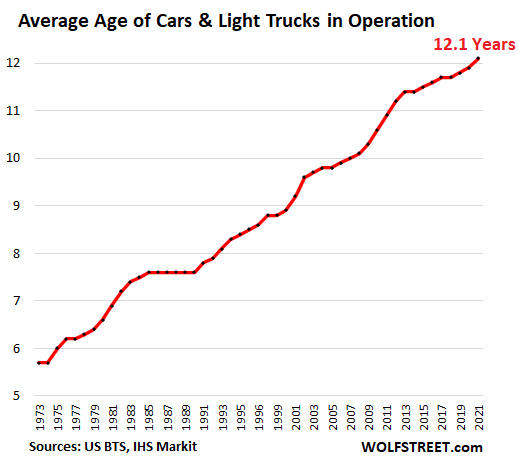
Additionally, the age of all the vehicles on the road is growing. Today, on average, vehicles on the road or Units in Operation (UIO) in the U.S. are 12.1 years old. And this has continued to go up, as the chart below shows. Since the average price of a new vehicle for a retail buyer has recently pierced $47,000, and there has been a global pandemic keeping more people at home, it's no surprise that individual people are keeping their vehicles longer.
But fleets have a different agenda. They need the latest vehicles, with the most up-to-date features to be able to charge higher management fees, delight their clients drivers, and leverage modern connected services to manage their costs and enable additional revenue. And more and more fleets have made a stakeholder commitment to "go green" and increase their electric vehicle mix. Of course currently they cannot even get the cars they need (certainly at the prices they are used to) because of the global chip shortage affecting everyone. But over the long term, fleets will fill all of their parking spaces, and the vehicles they operate will more often be battery powered EV's. So what does this mean for how these vehicles are managed?
One idea to think about is how data can be used to monitor their electric vehicle's battery health, performance, efficiency, and longevity separately from the rest of the vehicle itself. Think about how the airplane business has changed over the last 20 years. Today, when Delta buys planes from Boeing, the engines for these planes are provided along with the plane, but the responsibility for managing those engines lies with the engine supplier, not with Boeing. Companies like Pratt & Whitney have organized intelligent services to help airline operators deal with the performance of the engine itself, and the lucrative maintenance that goes with it. Deep analytics are possible using connected data.
Similarly, for battery electric vehicles, today there are providers that can ingest battery data at the cell, module, and pack level, run algorithms and analytics on this data, and provide feedback on exactly which cells have issues within one vehicle, or within many vehicles. Companies like Voltaiq, through their Enterprise Battery Intelligence (EBI) platform, give fleets an edge for keeping their EV's healthy, improving driver satisfaction, and ultimately realizing higher vehicle residual values, increasing the vehicle "turn" price at auction, and thereby lowering TCO accordingly.
And we know that the Li-Ion batteries in modern electric vehicles can last a long time. Recently, the co-fonder of Tesla and its former CTO, JB Straubel, was quoted as saying that most EV batteries will last 15 years or more. This encourages innovative providers to create new ideas like "battery insurance" separately from the vehicle itself. Since many battery packs will soon be commonly designed to be changed if needed, it makes sense treat the battery as an "asset" separately within the vehicle asset. For example, as a second or third owner, the previous owner or seller could easily transfer the battery insurance policy to you, just like today they might transfer the extended warranty contract. Fleets see the benefit of protecting the health of their overall EV fleet, and will use the tools of insurance to help keep their costs manageable for battery upgrades within the operational cycle. They will also benefit by the value that having the battery data brings to the next purchaser of their fleet vehicle, again supporting the higher auction prices these fleets are looking for.
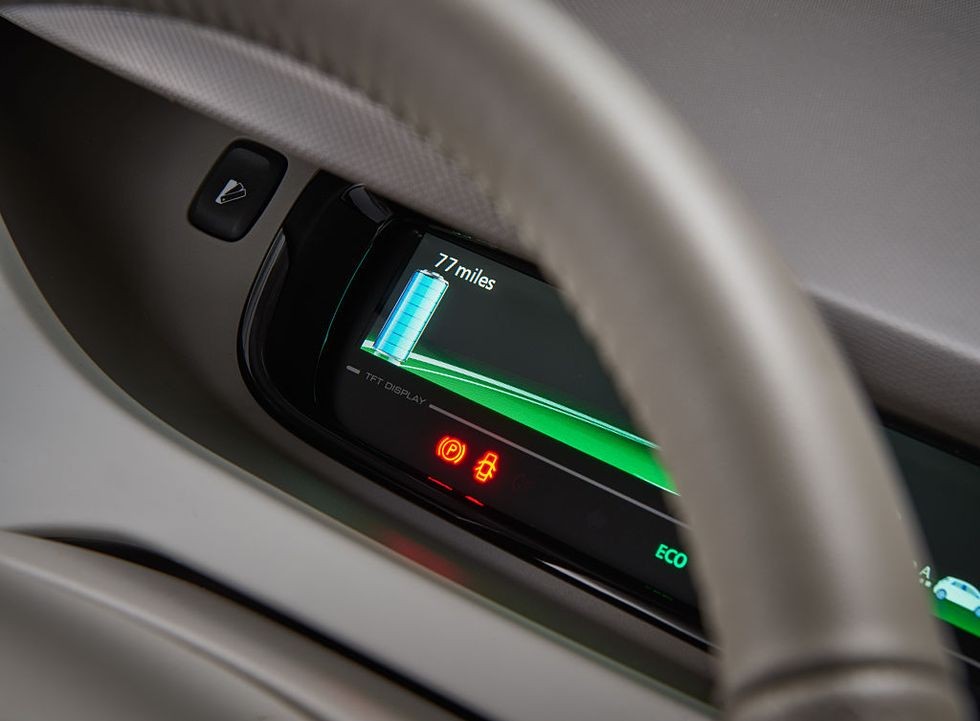
Another opportunity exists within the integration of many data streams for electric vehicles. When you add in the increasing amount of data available from EV charging networks about charging patterns, for example, and combine it with classical telematics location data from the OEM vehicle manufacturer or the fleet telematics provider, you get a good picture of how the vehicle is charged, where this refueling occurs, and the driver behaviors of EV owners. Fleets have for years provided incentives to fleet drivers to drive their cars safer to keep insurance costs down. Now they will be focusing on helping "coach" their new electric vehicle drivers to maximize the range and battery health of their vehicle asset. For example, with modern connected systems, the fleet manager will know which drivers charge their EV most efficiently, overnight at home perhaps, instead of daily at the coffee-house DC fast charger. Why is this important? Simply because we know that cycling a battery too much on fast charging can erode the life of an electric vehicle's battery. Here's a quote from an OEM website: “Frequent use of DC Fast Charging can have a negative impact on battery life and may limit battery performance over time.” A common warning and mostly this is because of the heat generated. In practice, drivers will use a variety of charging methods, so this likely will not be a major issue. But it's great that a fleet deploying electric vehicles can know what's happening when their EV assets are "fueled" and where this is being done and how.
Finally, the variety and types of fleets themselves that are or soon will be operating electric vehicles are changing rapidly. Traditionally we think of fleets as large enterprise companies like Hertz and Avis in consumer rental, or LeasePlan for corporate fleets, for example. These are companies operating thousands of vehicles, in countries all over the world. But because of the capabilities provided by cloud computing platforms connected to mobile applications, even very small fleets can spin up connected services that can monitor all their vehicles, whether they are operating a Mobility-as-a-Service (MaaS) program, short-term local rentals, monthly subscription rentals, and even peer-to-peer sharing programs where many people share many different cars. Keeping track of all these assets is now easier than ever, and since the operating costs of a battery electric vehicle are also low, smaller fleets can get into the new mobility business quickly and in a very accessible and sustainable way.
New electric vehicles will be put on the road, and many more than ever will be operating at higher service periods since they will be owned by fleets, not individual owners. And since the objective of a fleet, in addition to keeping TCO low, is to keep "uptime" high, we may see many new EV's operating more than 70% of the time. In contrast, the average owner of an automobile, EV or otherwise, keeps it parked most of the time. Some long-time fleet operators like Great Britain's RAC (roadside assistance in the UK) maintain a 99% uptime rate. With such high levels of readiness and operating hours, monitoring vehicles using modern software and connected tools is the only way to really cover your EV assets!
Learn more about how you can better prepare for the new mobility future and the changes, and opportunities this creates, by contacting us at Automobility Advisors.
More from the AMA team.
 Newsletter
What's the Value of Electric Vehicles?
New vehicle prices are at record highs and EVs cost even more. What drives residual value for an electric vehicle, why battery health matters most, and why EV insurance still costs more.
George Ayres · Mar 2, 2022 Newsletter
Drivers pick the station by what is next door
Paren studied 4,105 DC fast charging stations at 100 kW or above and found the median site running 9 sessions a day, grocery-adjacent sites running 42, and sites with nothing within walking distance running 3. A 100 kW session takes 25 to 40 minutes, which is what a grocery run takes, so the low numbers at most sites measure whether people will wait in a parking lot for half an hour and tell you very little about EV demand in that trade area.
George Ayres · Sep 10, 2026 Newsletter
Tesla’s Sales Crown Taken by China
Tesla and the EV market have been near synonymous since the introduction of the Model S sedan in 2012. Over the last 13 years, Tesla’s grip on the market has seemed near-insurmountable, with a roaring stock price and loyal legions of fans supporting the company’s every move.…
AutoMobility Advisors · Jun 9, 2025
Talk to us about what you want to accomplish
Schedule 20-minutes with AMA. We will use the time to understand what you are trying to accomplish and how AMA can help.