Is Your Knowledge Electric?
More models and more chargers are coming. The missing piece for the early majority of EV buyers is knowledge — and the dealers, salespeople and advertising that can deliver it.
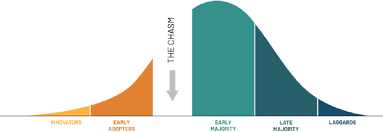
In a previous edition of the Automobility Roadmap, we discussed the various groups involved in technology adoption, like electric vehicles, using the framework developed by Geoffrey Moore in this classic book “Crossing the Chasm” first published in 1991. The “chasm” is the place between the Early Adopters, and the Early Majority, where the slope of the sales curve really takes an upward trajectory. I suggest to you that we are deep in the chasm today, regarding electric vehicles, and we need to take some actions now to make it across. Of course we can slowly descend down one-side and up the other, like crossing the Grand Canyon’s switchbacks by burro, or we can make like Evel Knievel and rocket across (and actually make to to the other side) to the land of the Early Majority. But it might actually make the most sense to simply build a wide bridge for the buyers in the Early Majority that leads from the side of the Early Adopters. Since they have already taken the leap, so to speak, to electric based on current knowledge (pun intended), what must we provide to the wider Early Majority to accelerate their own decision-making about EV’s?
I suggest there are three main things that need to be provided for the “mass-market” to make the leap: 1) More models at mainstream prices 2) Widely available electrons or “fueling” and 3) Knowledge about owning, driving, and living with an electric vehicle. The first two points are well underway, with many new launches, and some big winners (like the Kia EV6), and more charging stations are installed each week to increase the fueling distribution for EV’s . But only recently has the last point started to be addressed, despite the fact that EV’s have been around for many years. Just this week, Ford announced its “Electric University” to create a way to train its vast dealer network to get more comfortable with selling to, enabling ownership of, and servicing for customers looking to buy their first electric vehicle. And since Ford has now decided to split its auto business into two, with Ford “Blue” continuing to sell traditional internal combustion vehicles, and Ford “Model E” selling electric vehicles, some new training infrastructure makes sense.
Training the dealers is one part of the equation, but how about going directly to the buyers? Isn’t that what advertising is for? But much EV advertising is still playing off the same themes automakers have used forever to woo new customers. A current television commercial for a new luxury EV SUV focuses on “style” and fashion ideas, inferring that if you are stylish enough you should own one. I for one absolutely LOVE this vehicle, and it has many, many solid reasons to encourage buyers own it, well beyond its style. But none of these reasons come across yet in its ads, so my hope is that subsequent ads do this education work. The type of people buying this vehicle will be very traditional Early Majority and many, many Late Majority people, so it will pay off to help them understand how easy it is to own an EV like this one. These Majority buyers are “hesitant” to change to something they think is generally good, but because they don’t understand the risks yet, they assume the risks must be high, and that living with an EV will be difficult. Automakers need to make it easy for them. Combine a well-informed and motivated buyer with a well educated dealership sales consultant, and you have a new EV owner!
The pick-up category is the most interesting EV adoption segment. You have very high volumes of traditional buyers, who have been comfortable with their vehicles for a long time combined with buyers that have shown a willingness to pay for comfort, luxury, and even technology too, with the current average US pickup selling for $55,000 or more, about $10,000 more than the average new car. A perfect environment for EV trucks to succeed. Let’s contrast two of the best know rivals in this space, Ford and Rivian.
First, let’s look at Ford. They have the best-selling pickup nameplate for the past 40 years. The Ford F-150 Lightning is getting rave reviews. It can even power your house! But the dealers that will be selling these will need to have some patience to and explain the differences their customers can expect for living with an EV truck. Refueling is not a 5 minute process. Range may be reduced versus the current truck they have too. Torque and acceleration though will be terrific. But it costs money to put a charger in your garage or machine shed. And how many chargers are in the small village you head to when you “go to town” for groceries (and previously gas). Are their local dealership salespeople ready to answer their questions and reassure them about buying an electric pickup and how it will fit within their lives. I suspect that first time EV pickup buyers from a brand like Ford will be asking a lot of questions, both before they buy, and after they take it home. Just ask the folks at John Deere about how important keeping your buyer engaged is after the sale. It’s not about the purchase, it’s about the care and attention during the ownership cycle.
Contrast this with the situation Rivian has with their new pickup truck. As a new brand entirely, by definition their owners are Innovators or Early Adopters. So their mindset is already in a great place to talk about EV trucks, the differences in owning one, and the risks for finding a charger somewhere. Lots of cool innovative features in their truck make this an exciting purchase, and the truck has gotten great reviews. While raising the price $12k on owners that had already made deposits (and then abruptly withdrawing it) shows a certain lack of sales and marketing experience, Early Adopters will forgive a lot in order to be the first one’s on their block with a Rivian. Since Rivian really has no “installed base” they are simply pulling sales from all the people considering an EV in the truck market, or maybe people thinking a pickup is much cooler than a Nissan Leaf and you can do some serious off-roading with it. In fact, instant torque at 0 RPM is pretty handy in the dirt.
And Rivian has a lot of nice benefits to ownership that go along with being a “Member” that are consistent with this off-road focus such as:
- Unlimited free R1T electric truck and R1S EV SUV charging on the Rivian Adventure Network and all Rivian Waypoints chargers - Rivian off-roadside assistance with Adventure Extraction for trailside recovery - Charge Assurance for charging assistance if you run out of range - Rivian-led experiences, gatherings, and events - Unlimited access to 4G connectivity - Rivian renewable energy purchases—“Rivian will ensure 100 percent of the energy your vehicle consumes is matched with renewable energy purchases” - Rivian educational programs, kids’ activities, and stewardship meet-ups - More benefits including drive modes and enhanced capabilities and in-cabin content
I have no doubt that Rivian will sell a lot of trucks to EV-savvy buyers. But if they went the extra mile and helped ease the transition to EV’s for the traditional truck buyers AND encouraged them that taking a risk with a new brand was safe, they might peel off enough of the Big 3’s truck owners to make a serious sales volume happen. So they still have an education challenge since inertia will keep people comfortable where they are. Early Majority (and Late Majority) will listen to people they know and trust before walking across that wide bridge to the EV side, and if that happens to be their local Ford salesperson, then maybe the Lightning will strike instead.
More from the AMA team.
 Newsletter
Tesla’s Sales Crown Taken by China
Tesla and the EV market have been near synonymous since the introduction of the Model S sedan in 2012. Over the last 13 years, Tesla’s grip on the market has seemed near-insurmountable, with a roaring stock price and loyal legions of fans supporting the company’s every move.…
AutoMobility Advisors · Jun 9, 2025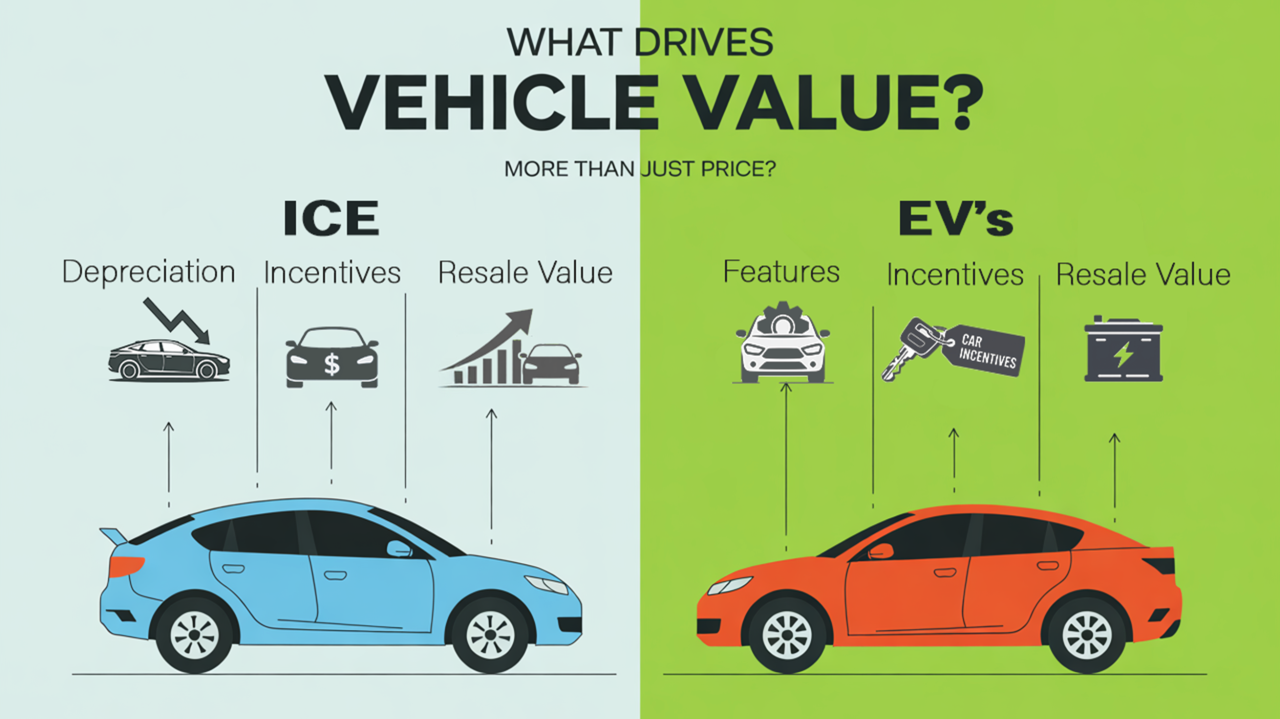 Newsletter
Electric Vehicle Values
One of the biggest questions at the forefront of any car buyer’s mind is the future value of their vehicle. Purchasing is not a complex act. Simply put, the majority of automotive customers want the most perceived “value” for their money that they can possibly get. Value can…
AutoMobility Advisors · Apr 9, 2025 Newsletter
The Case for EV Performance Cars
When people used to think of EVs, what sort of image would come to mind? Perhaps it would be the original Nissan Leaf… an affordable but relatively pedestrian and relaxed commuter car intended for nothing more than a typical daily commute to an office and back. Or maybe…
George Ayres · Mar 12, 2025
Talk to us about what you want to accomplish
Schedule 20-minutes with AMA. We will use the time to understand what you are trying to accomplish and how AMA can help.